How to get rid of termites
A decision path for each US termite group, built from university extension and USDA Forest Service guidance.
Getting rid of termites depends on the group. Subterranean termites need a professional liquid soil treatment or a bait system 1. Drywood termites need fumigation, heat or a localized treatment after a thorough inspection 23. Dampwood termites usually die out once the wet wood dries 2. Homeowners can fix leaks and break wood-to-soil contact, but chemical control of an infestation belongs to a licensed professional 4.
In forests, termites do useful work. They break down dead wood, return nutrients to the soil and keep it porous enough for plants to grow 4.
A minority of species turn the same appetite on buildings. In California alone, thousands of housing units need treatment for termites every year 4.
Maybe you have just found a mud tube on the foundation or a small pile of pellets under a window. The next question is who to call and what to buy.
But a professional treatment can mean trenching around the house, drilling the slab and signing a service contract 5. A product from a hardware shelf looks simpler, but there is no easy way to know whether it will ever reach the colony.
So can you get rid of termites yourself, or does every infestation need a professional? We compared the control guidance of eight university extension services and the USDA Forest Service to answer that for each termite group.
Which termite is it? The group decides every next step
UF/IFAS calls a correct identification the most important part of termite control, because treatments for different species are drastically different 2.
Depending on the species, UF termite researchers list the right response as no action, removal of the infested item, structural fumigation, a bait or a liquid soil treatment 6. Those treatments are target-specific and often mutually exclusive 6.
The evidence you have found usually points to the group:
- Earthen mud tubes on a foundation, a wall or the underside of a countertop are strong evidence of subterranean termites 2.
- Small, uniform, six-sided pellets piling up on a floor or countertop are a sign of drywood termites 7.
- Wet, decaying wood holding a mix of loose and clumped pellets points to dampwood termites 2.
- Wide, thin, plaster-like earthen coatings on palm trunks or wooden fences in Arizona are the work of a desert termite, Gnathamitermes perplexus 8.
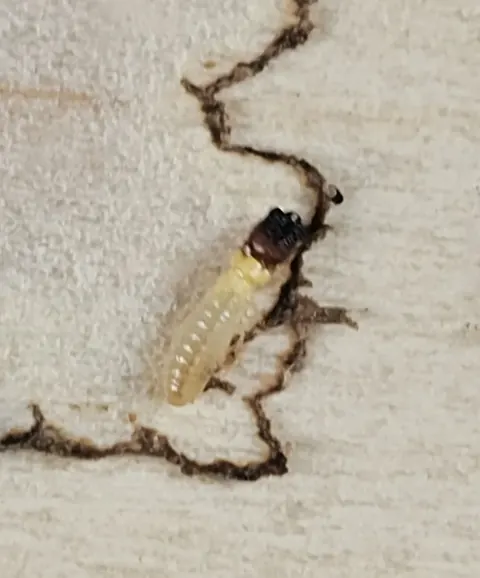
When the insects themselves are at hand, the termite identification key separates the groups by wings and soldier heads. Workers cannot be identified to species, so a reliable answer needs soldiers or winged swarmers 9, which a free extension lab can confirm by mail.
Subterranean termites: treat the soil or bait the colony
Subterranean termites nest in the soil and reach wood through soil or mud tubes. Fumigation, heat, freezing and electrocution devices therefore fail against them, because the reproductives and most of the colony sit near or below ground level, out of reach 4.
UF/IFAS names two primary ways to manage them in the US: non-repellent liquid termiticides, which keep the colony from reaching the structure, and chitin-synthesis inhibitor baits, which eliminate a colony that feeds on them. Either one must be applied by a licensed pest management provider 1.
Spraying swarmers or the surface of infested wood kills the termites in view, yet it neither stops the infestation nor protects the house from future attack 5.
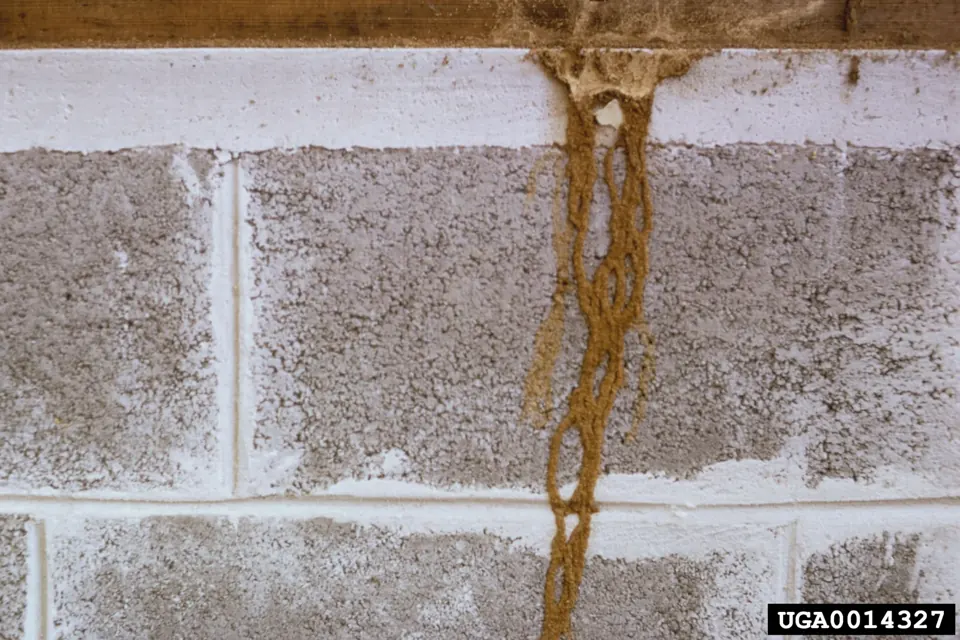
Live termites, a tube rebuilt after you break it, or swarmers emerging indoors call for a professional inspection followed by one of the two subterranean termite treatments 71.
There is time to compare offers. Because termites typically work slowly, the USDA Forest Service says extreme haste is not required, although treatment should follow within a few months of discovery 10.
Formosan termites: find the water source first
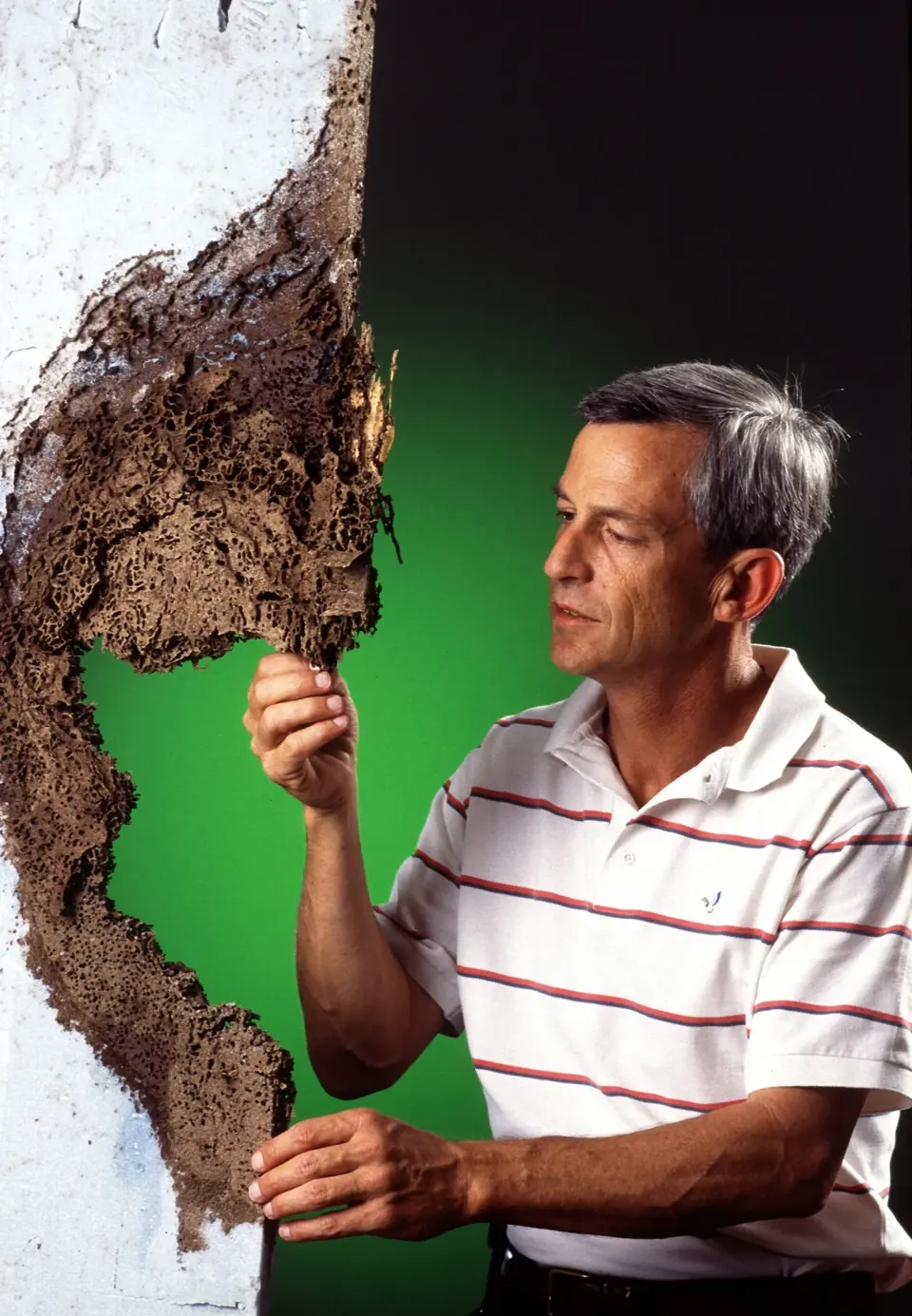
Formosan subterranean termites depend less on ground contact than native species and often nest inside walls 10. Mud tubes high on interior walls, ceilings, soffits or fascia boards usually mean a Formosan infestation 7.
A colony living above ground on a leaking pipe or standing water cannot be controlled with the usual soil treatment, so NC State Extension puts finding and correcting the moisture problem first 5.
Contracts need a careful read with this species. Florida allows companies to exclude Formosan and Asian subterranean termites from warranties 2. Some Texas contracts exclude Formosan termites as well, so the species should be confirmed before anything is signed 11.
Drywood termites: whole-structure or localized, never the soil
Drywood termite colonies live inside sound wood and are not connected to the ground, so their galleries hold no mud 2. Soil termiticides and baits have no role against them 2.
UC IPM sorts every drywood method into two classes 3. A whole-structure treatment (fumigation or heat) reaches all infestations at once, including hidden ones, while a localized or spot treatment covers a single board or a small group of boards.
The choice follows from how far the infestation reaches and how much of it can be seen:
- Widespread infestation and damage: whole-structure fumigation, which UF/IFAS rates as highly effective 42.
- A whole-structure treatment without gas, or one unit in a larger building: heat, which can treat portions of a large structure separately 3.
- Infested window or door trim, or a single piece of furniture: wood replacement, removal of the item, or a spot treatment after a thorough inspection 2.
Drywall and other wall coverings hide colony boundaries, so a localized treatment can never guarantee that every infestation in the house was reached 3. Botanical products such as orange oil have been tried, but lab and field tests at two universities question the efficacy of at least one of them, d-limonene 3.
Pellets alone cannot show whether a colony is still active. UC IPM suggests clearing the pellets below a kick-out hole and checking a few days later for fresh ones, keeping in mind that building vibration and movement can also dislodge some pellets 3.
Why drying the wood usually ends a dampwood infestation
Dampwood termites typically infest decayed wood kept moist by soil contact or a water leak, so their presence signals a moisture problem or wood decay in the structure 4.
Drying the infested area is usually enough to control them. That can mean fixing roof and water leaks, provided the wood is not too decomposed, while wood replacement and moisture prevention are also effective 2.
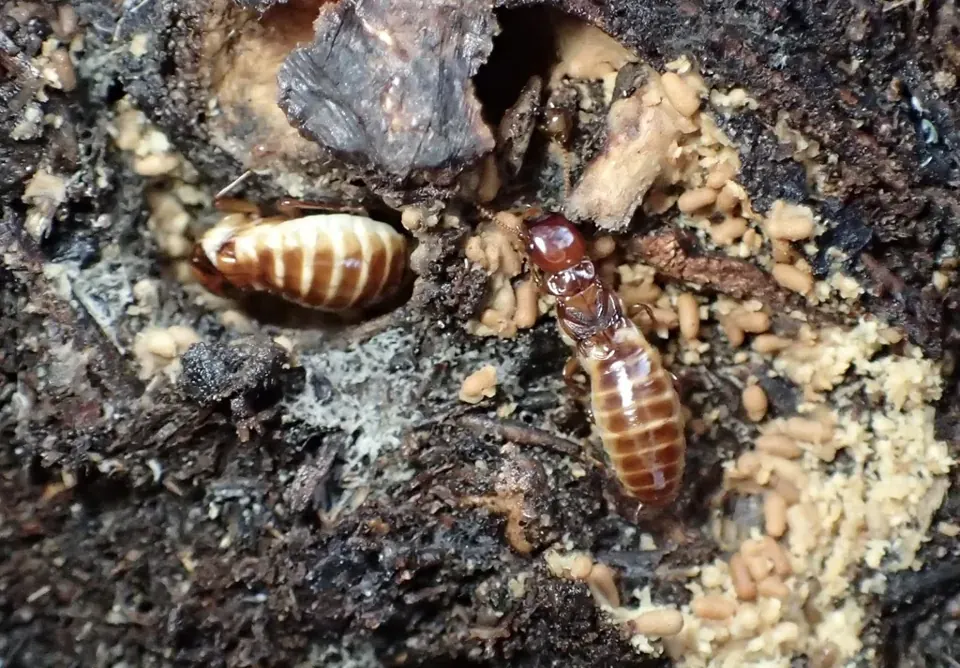
For the Pacific Coast species of Zootermopsis, UC IPM gives the same advice: correct leaks in roofs and decks, then replace the damaged wood 3.
Florida's Neotermes species can extend into dry wood several meters from the wet spot. Once the remote moisture source is removed, the colony gradually declines 12. Winged Neotermes found indoors usually come from a yard tree or a woodland colony, not from the house 12.
Where untreated wood cannot be removed from the moisture source, chemical treatment may be needed. Borate salts are water soluble and tend to be drawn into damp, infested wood, though they can harm plants 12.
When no treatment is the right call
Some sightings call for a look at the house rather than a pesticide. Swarmers rising from a stump, log or woodpile 25 feet or more from the building are rarely a cause for concern 7. NC State Extension says the same of swarmers near stumps and landscape timbers 5.
Oregon State University's extension service puts it plainly: termite activity outdoors is part of the natural environment and does not require treatment 13. Mississippi State suggests using a yard sighting as a reminder to check when the building was last treated and inspected 7.
The earthen coatings of Gnathamitermes perplexus in Arizona belong in this group. University of Arizona extension describes these termites as generally not pests and advises against treating them unless they are found inside a structure 8.
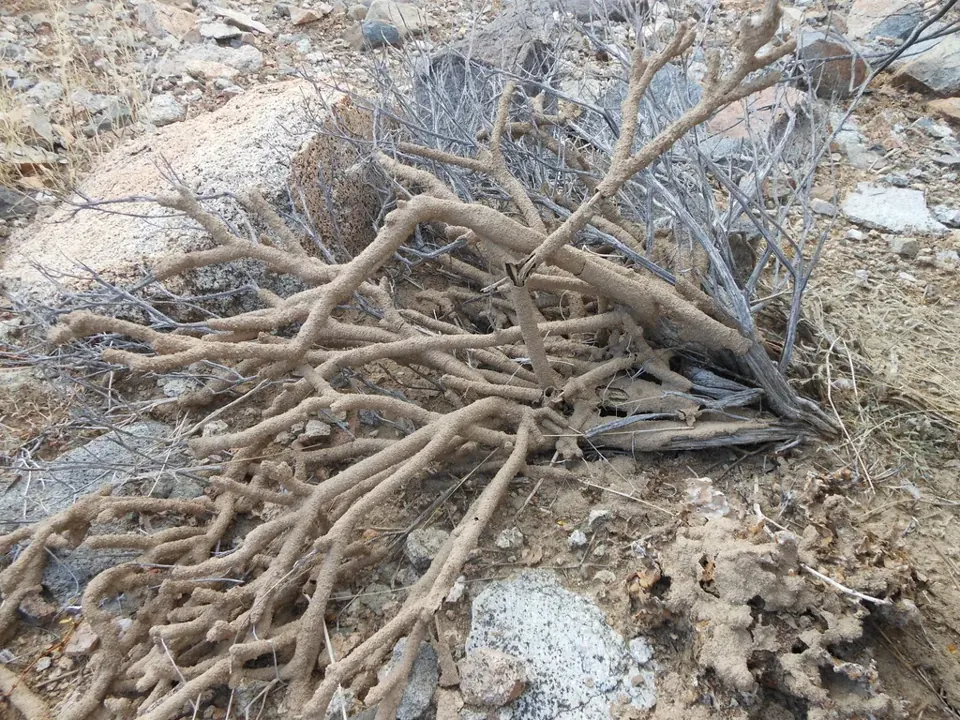
Its feeding damage is typically only cosmetic. A second Arizona bulletin gives Wheeler's termite (Amitermes wheeleri) the same verdict, while noting that both species can occasionally infest and damage wooden structures, which is why a find indoors calls for a professional inspection 14.
Conehead termites in South Florida: report them
The conehead termite (Nasutitermes corniger) is an invasive species found in limited areas of Broward County and under an eradication campaign 6. Its soldiers carry a snout-like nasus in place of large jaws, and its colonies build carton nests on trees 15.
UF/IFAS asks homeowners not to treat it themselves and to report suspected sightings to the Florida Department of Agriculture and Consumer Services 2. Professionals treat the tunnels and feeding sites with non-repellent liquid termiticide. Heavy structural infestations may also be fumigated 15.
What you can do yourself, and where DIY stops
Homeowners can replace termite-damaged wood and correct the conditions that invite subterranean termites. Pesticide applications are highly regulated, though, so the inspection and control program itself needs a licensed professional 4.
The DIY work extension services support removes water, wood and hidden access, and it matters because subterranean termites already in a building's wood die if they lose contact with the soil or another moisture source 10.
- Photograph any mud tube, then break a section about an inch long and watch for termites or for a repair over the next few days 7. An empty tube does not prove the termites are gone 5.
- Fix leaks, point air conditioner drain lines and irrigation heads away from the walls, and make sure water runs away from the foundation 2.
- Remove lumber scraps and branches from the property, and stack firewood away from the house 2.
- Take down trellises and other wooden structures that connect the ground to the house. Any wood that must stay in soil contact should be preservative-treated 10.
- Keep at least 6 inches of foundation visible between the siding and the soil or mulch line, and set plants at least 2 feet from exterior walls 2.
- Trim branches back from walls and roofs, since subterranean termites can use them as bridges 2.
Breaking or scraping off tubes does not control the colony, which stays in the ground and finds other ways in 7. A professional inspection is still advisable even when no live termites turn up 7.
Chemical treatment of an active infestation is where extension advice turns against DIY. UC IPM rates do-it-yourself termite pesticides as generally not effective and reports that California has no reliable over-the-counter termite products 4.
NC State Extension shows the scale of a soil treatment. It needs a trench 4 to 6 inches wide and 6 inches deep along the foundation, outside and inside the crawl space, and on all sides of piers, with most termiticides applied at 4 gallons per 10 linear feet for each foot of footer depth 5.
For a 40 by 30 foot house with a one-foot footer, the outside wall alone takes 48 gallons, and the total can exceed 100 gallons once the interior wall, porches and garage slabs are included. Most labels also require a cartridge respirator in a crawl space, and the slabs call for a drill that can cut through concrete 5.
Retail baits are a partial exception. Some can be bought and used by homeowners, while others need installation and monitoring by licensed professionals 10, and UC IPM notes that the most effective products are in the second group 4.
Hiring a professional: what to settle before you sign
An inspection by a licensed pest management professional comes before any treatment 4. The termite inspection also establishes where subterranean termites are entering the house 2.
Arizona's extension service recommends contacting several pest management professionals for estimates 8. For drywood work, UC IPM suggests at least three structural inspection reports and a check of each company's license with California's Structural Pest Control Board 3.
The contract matters as much as the chemistry. NC State Extension suggests settling these points before signing 5:
- Does the treatment require a waiver of minimum standards, and which steps will be skipped and why?
- Is the guarantee retreatment-only, or does it cover repairs, and what does it exclude?
- What are the terms for renewing or maintaining the contract?
A spot treatment for subterranean termites is cheaper, but the area where termites were found may not be the colony, and outside an existing contract it often carries a very limited guarantee or none 5.
Spray foam insulation raises a separate issue: it can prevent a thorough inspection, and many companies will not place a warranty on homes that have it 2.
Keeping a treated house protected
UF/IFAS gives soil termiticides a service life of 2 to 15 or more years and bait systems 4 to 7 or more years, or indefinitely while the system is maintained 2.
Excavation, digging by pets or wildlife, or a washing rain can disturb the treated soil, and those areas may then need another treatment 2. NC State adds habits that weaken protection: moving treated soil away from the foundation, covering it with mulch or leaf litter, and tampering with bait stations 5.
Regular inspections catch what a treatment misses: UF/IFAS recommends an annual renewal inspection by a trained, licensed inspector 2. In areas with Formosan termites, Mississippi State calls for annual inspections whether or not the building has ever been infested 7.
Between visits, the early signs of termites are the homeowner's job. In Louisiana's Formosan swarm season, turning off outdoor lights at night in May and June avoids drawing swarmers to the house 16.
Questions
Can I get rid of termites myself?
You can remove what termites need: leaks, wood touching soil, wood debris and hidden access to the house 2. Chemical control of an active infestation is another matter. UC IPM rates do-it-yourself termite pesticides as generally not effective 4.
What kills termites instantly?
No treatment removes a colony instantly. Liquid termiticides kill termites within hours or days of contact, while baits take weeks or months to work through the colony 10.
Does orange oil get rid of termites?
Orange oil has been tried against drywood termites, but lab and field tests at two universities question the efficacy of d-limonene, one of the botanical treatments tested 3. UC IPM also rates home-use spot products as not effective 3.
Do termite bait stakes from the store work?
Some termite baits are sold for homeowner use, while others must be installed and monitored by licensed professionals 10. UC IPM notes that the most effective bait products are for professional use only 4.
How quickly do I need to treat termites?
Within a few months. Termites typically work slowly, so the USDA Forest Service says extreme haste is not required, but treatment should follow within a few months of discovery 10.
Do dampwood termites need pesticide?
Usually not. Drying the infested area is usually enough to control dampwood termites, along with replacing badly decayed wood 2.
Sources
- Chouvenc, T., N.-Y. Su, and R. H. Scheffrahn. Native Subterranean Termites: Reticulitermes flavipes, R. virginicus, R. hageni. UF/IFAS EDIS EENY-212 (IN369). Original May 2004; revised July 2024. doi:10.32473/edis-in369-2001. ask.ifas.ufl.edu
- Oi, F. M., J. Davis, J. McConnell, J. Corbus, N. Nelson, and M. Atkinson. Termite Prevention and Control. UF/IFAS Extension ENY-2044 (IN1277). Original March 2020; revised December 2023. ask.ifas.ufl.edu
- Lewis, V. R., A. M. Sutherland, and M. I. Haverty. Pest Notes: Drywood Termites. UC ANR Publication 7440. UC Statewide IPM Program. Updated 08/2014. ipm.ucanr.edu
- Lewis, V. R., M. I. Haverty, and A. M. Sutherland. Pest Notes: Subterranean and Other Termites. UC ANR Publication 7415. UC Statewide IPM Program. Updated 05/2014. ipm.ucanr.edu
- Hayes, C. Monitoring and Management of Eastern Subterranean Termites. NC State Extension Publications. Publication date Jan. 22, 2025. content.ces.ncsu.edu
- Chouvenc, T., R. H. Scheffrahn, and L. Buss. Termite Species Distribution in Florida and UF Termite Identification Services. UF/IFAS EDIS ENY-2079 (IN1360). Original May 2022; reviewed February 2025. doi:10.32473/edis-IN1360-2022. ask.ifas.ufl.edu
- Mississippi State University Extension Service, Dept. of Entomology. Signs of Termite Infestation. Year not stated. extension.msstate.edu
- Baker, P. Termite Management for Homeowners. University of Arizona Cooperative Extension AZ1356 (dated 3/2005). extension.arizona.edu
- Mississippi State University Extension Service. Insect Identification Service (termites). Year not stated. extension.msstate.edu
- Peterson, C., T. L. Wagner, J. E. Mulrooney, and T. G. Shelton. Subterranean Termites: Their Prevention and Control in Buildings. USDA Forest Service, Home and Garden Bulletin 64. Revised October 2006. research.fs.usda.gov
- Gold, R. E., M. Keck, E. Brown, and K. Schofield. Formosan Subterranean Termites. Texas AgriLife Extension Service, E-367 (dated 9/10). extensionentomology.tamu.edu
- Scheffrahn, R. H., and N.-Y. Su. Florida Dampwood Termites, Neotermes castaneus, N. jouteli, and N. luykxi. UF/IFAS EDIS EENY122 (IN279). Original January 2000; revised December 2005; reviewed February 2021. ask.ifas.ufl.edu
- Oregon State University Extension. Solve Pest Problems: Termites. Year not stated. solvepestproblems.oregonstate.edu
- Baker, P. B., and R. J. Marchosky, Jr. Arizona Termites of Economic Importance. University of Arizona Cooperative Extension AZ1369. June 2005. extension.arizona.edu
- Tong, R. L., K. E. Tenn, and R. H. Scheffrahn. Conehead Termite, Nasutitermes corniger. UF/IFAS EDIS EENY-745 (IN1275). Original December 2019. ask.ifas.ufl.edu
- Sun, Q. Preparing for the Termite Swarms. LSU AgCenter. Published April 20, 2026. www.lsuagcenter.com