Termite Identifier
Photograph the insect or the evidence and answer a few questions. The VTI test tells you whether it is a termite, which kind, and what to do next.
How the test worksWhere termites show up
Each photo was taken where termites or their damage were found.
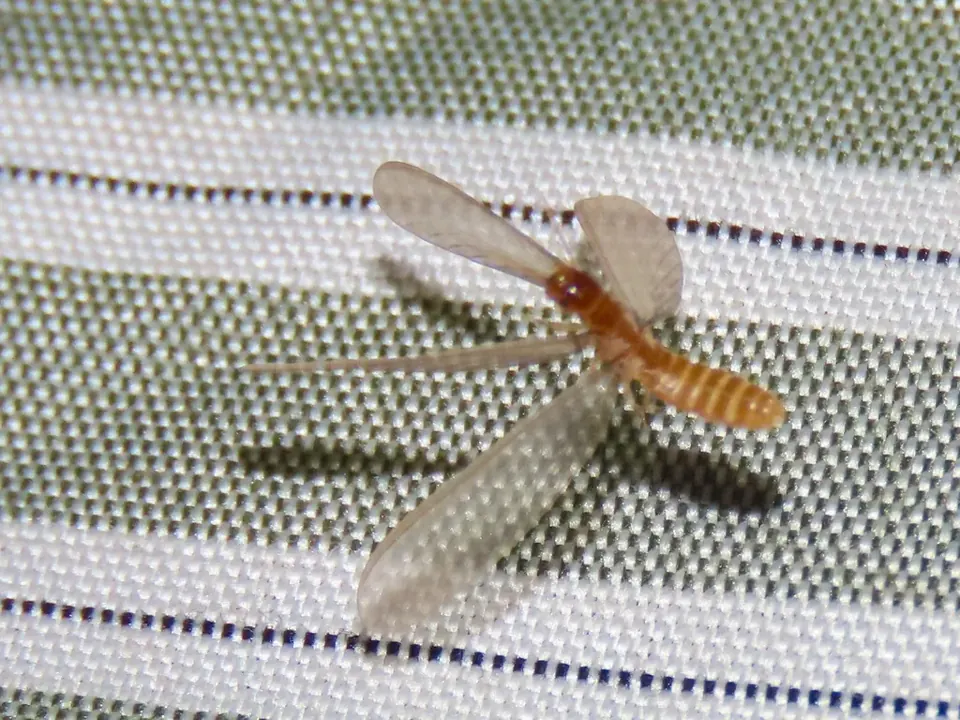
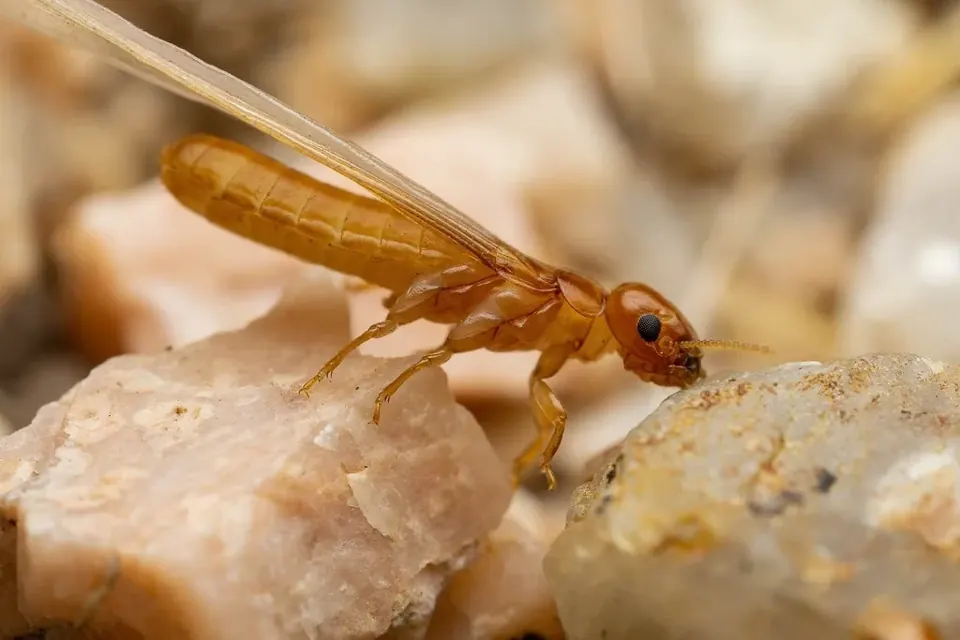
Swarmers and their shed wings gather on windowsills and near lights, often on a warm day after rain.1
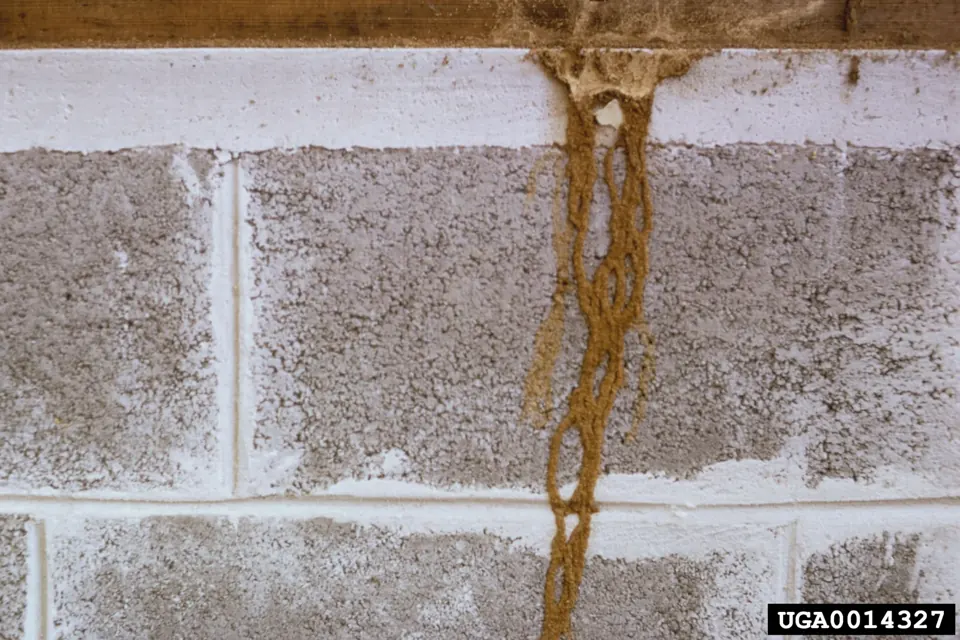
Earthen shelter tubes climb concrete or block to carry termites from the soil to the wood above.2
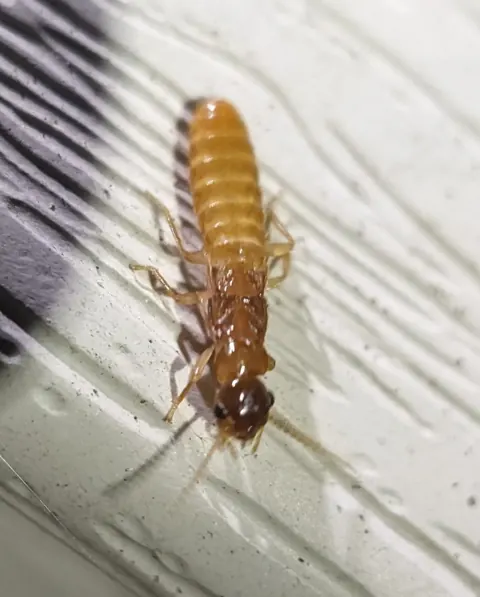
Wood and siding close to or touching the soil give subterranean termites an easy way in.3
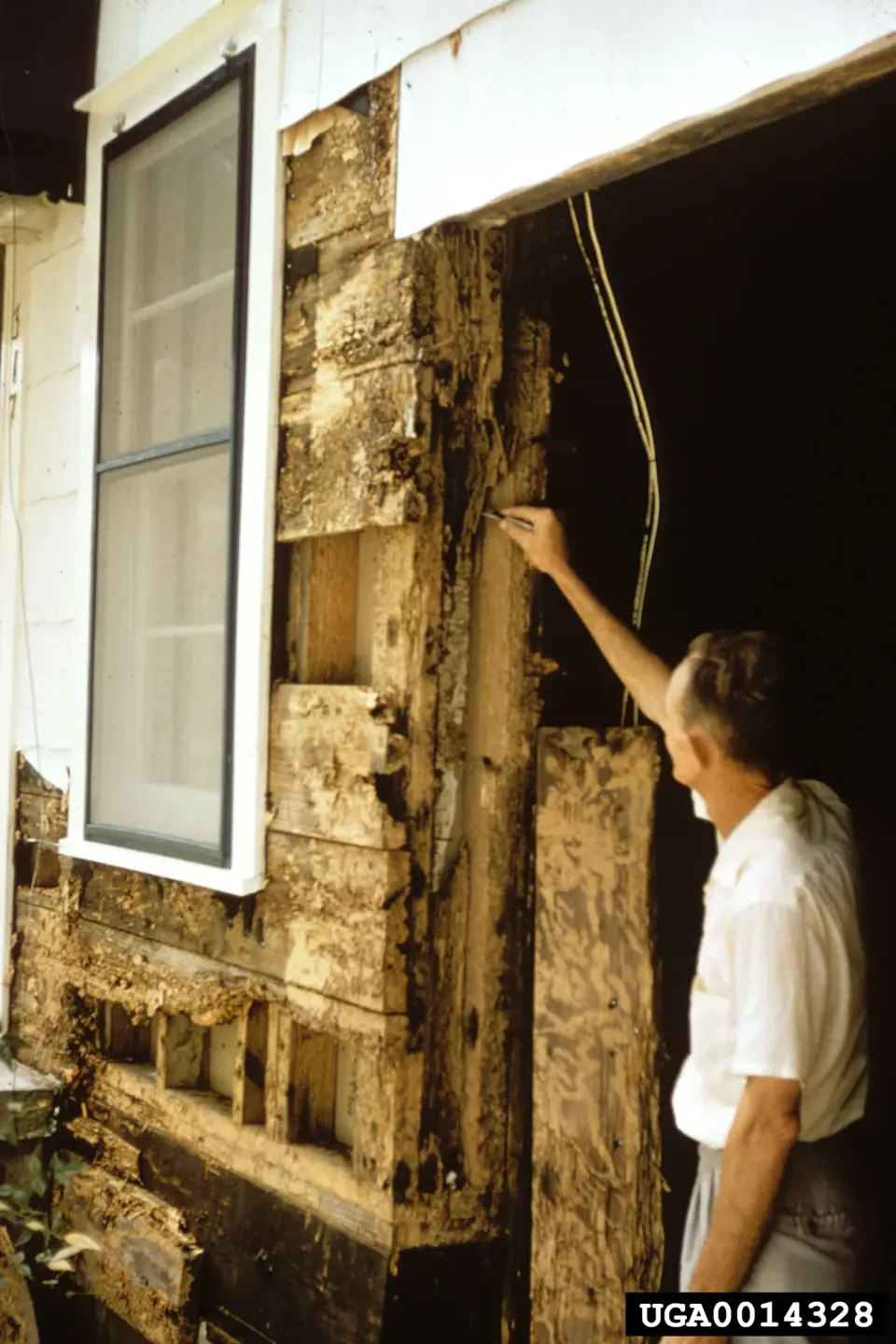
Framing can be eaten to a thin shell of sound wood, which is why inspectors probe and tap the surface.4
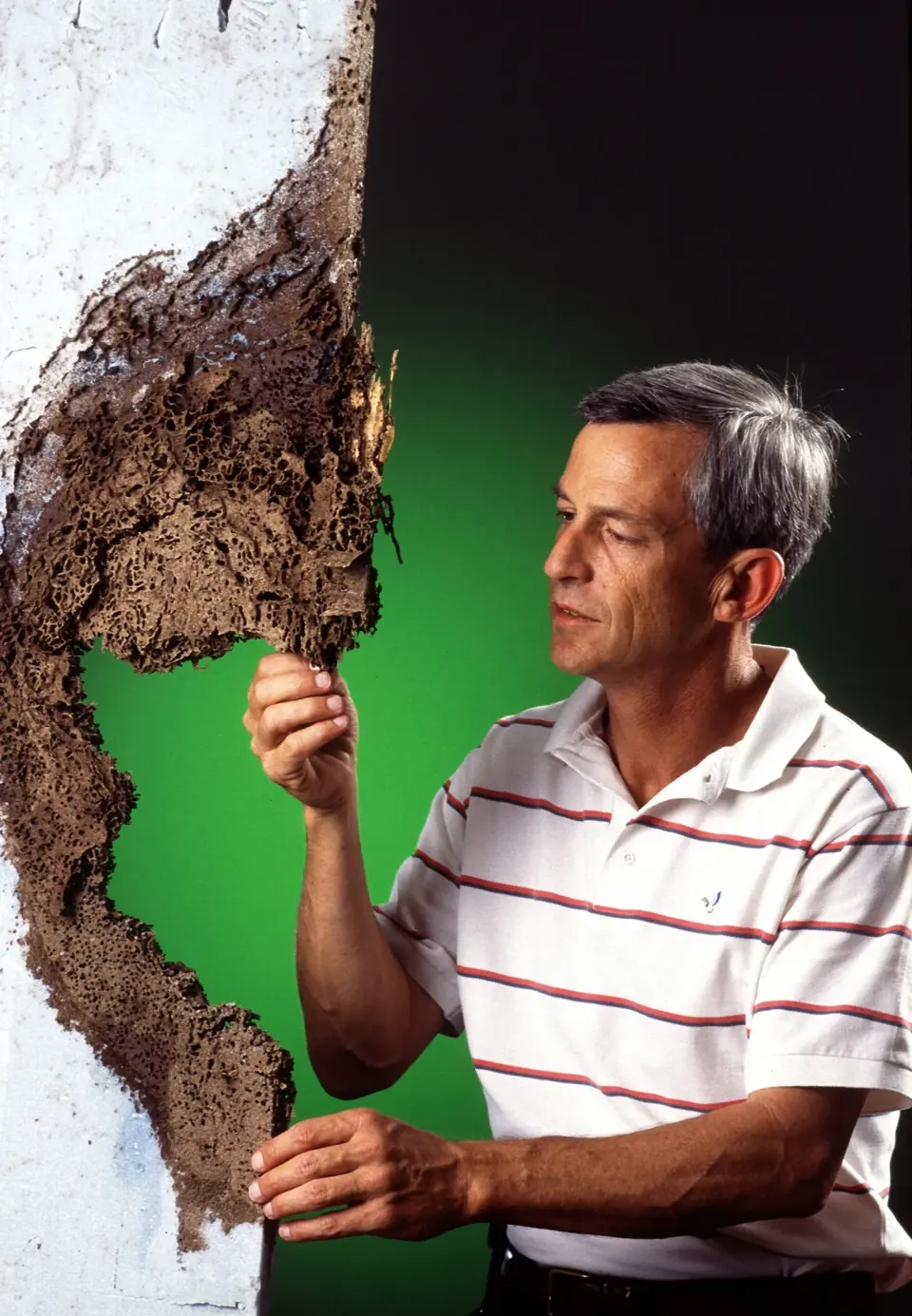
Where moisture allows, Formosan termites build carton nests of soil, wood pulp and feces inside wall spaces.5
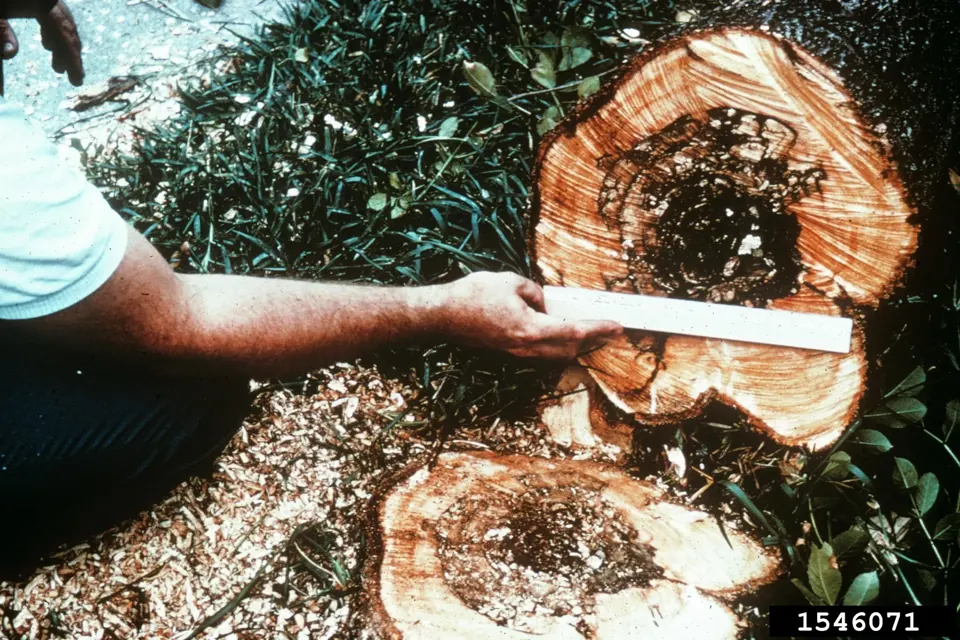
Stumps, roots and scrap lumber left in the soil can hold a colony close to the house.2
Termite or winged ant?
Ants and termites both swarm and shed their wings soon after the flight.6 Three features tell them apart, all visible to the naked eye: the antennae, the waist and the wings. 7
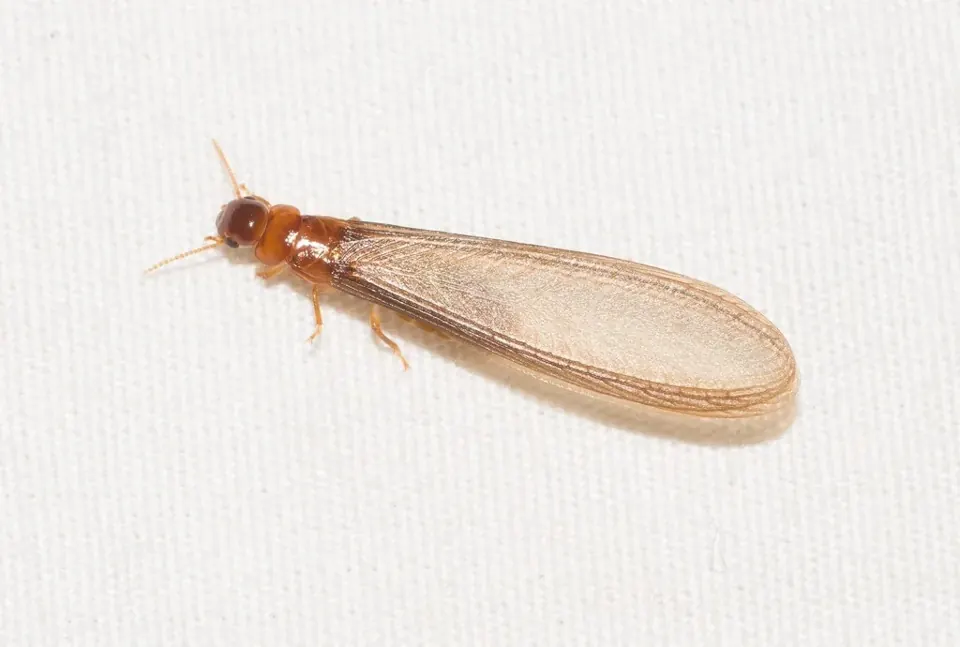
- Antennae straight, like a string of beads
- Waist broad, with no pinch between thorax and abdomen
- Four wings of equal length, extending past the body 8
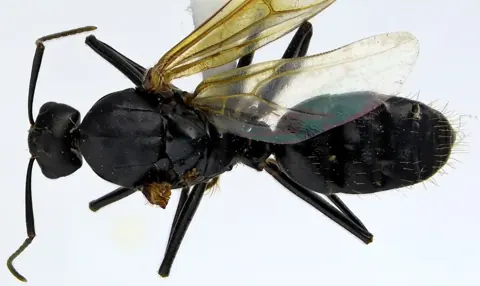
- Antennae bent at a distinct elbow
- Waist pinched to a narrow stalk
- Front wings longer than the hind wings 9
How the test works
Photograph
Take one to three photos. The guide shows the angles that carry the identifying features for what you found.
Answer
Give your state, where you found it, the time of day and how many you saw. Swarm months and hours differ by species, so these answers narrow the field.
Read the result
The result gives a verdict, three measures and the next steps to take. If the photos cannot decide it, the test asks for the one photo most likely to settle it.
Three measures in every result
How likely it is that the evidence comes from termites rather than a lookalike.
How much of the identifying detail your photos show.
How strong the sign of activity is, from a yard find to a swarm indoors.
Free result or full report
Free result
$0
- Verdict and confidence
- The three measures
- Most likely termite group
- Three next steps
Full report, PDF
$19
- Annotated photos and feature-by-feature findings
- Likely species for your state and its swarm season
- Treatment options that fit the termite group
- Questions to ask a pest professional
- A prevention plan for your home
- Where to send a sample for expert identification
- A dated evidence log for a landlord, buyer or seller
Research behind every answer
TermiteScanner studies how termites are identified and teaches homeowners to recognize them. Its guidance draws on university extension entomology and peer-reviewed studies, each numbered and linked where it is used. Findings from the VTI test, such as which features homeowners photograph most clearly, return to the guides as published research.
Questions
Is the VTI test free?
Yes. The verdict, the three measures and the next steps are free. The full PDF report costs $19.
Can a photo identify the termite species?
A sharp photo of the wings, droppings or mud tubes can show the group, such as subterranean or drywood, and the group decides the treatment. Species usually takes a specimen under a microscope, so the full report names the likely species for your state and where to send a sample.101112
What should I photograph?
Photograph the clearest evidence you have: a whole insect from above, a single wing on a plain surface, or the sign itself with a coin beside it for scale.
Do I need an app?
No. The test runs in the browser on a phone or a computer.
Sources
- Crawley, S., and C. C. Hayes. Termite Swarmers: What Do They Mean for You? NC State Extension Publications. Published Dec. 1, 2009; reviewed/revised Feb. 24, 2023. content.ces.ncsu.edu
- Lewis, V. R., M. I. Haverty, and A. M. Sutherland. Pest Notes: Subterranean and Other Termites. UC ANR Publication 7415. UC Statewide IPM Program. Updated 05/2014. ipm.ucanr.edu
- Peterson, C., T. L. Wagner, J. E. Mulrooney, and T. G. Shelton. Subterranean Termites: Their Prevention and Control in Buildings. USDA Forest Service, Home and Garden Bulletin 64. Revised October 2006. research.fs.usda.gov
- Chouvenc, T., N.-Y. Su, and R. H. Scheffrahn. Native Subterranean Termites: Reticulitermes flavipes, R. virginicus, R. hageni. UF/IFAS EDIS EENY-212 (IN369). Original May 2004; revised July 2024. doi:10.32473/edis-in369-2001. ask.ifas.ufl.edu
- Gold, R. E., M. Keck, E. Brown, and K. Schofield. Formosan Subterranean Termites. Texas AgriLife Extension Service, E-367 (dated 9/10). extensionentomology.tamu.edu
- Mississippi State University Extension Service, Dept. of Entomology. Are These Termites or Ants? Year not stated. extension.msstate.edu
- Baker, P. B., and R. J. Marchosky, Jr. Arizona Termites of Economic Importance. University of Arizona Cooperative Extension AZ1369. June 2005. extension.arizona.edu
- Gibb, T. J. Finding Winged Termites Is a Red Flag. Purdue Extension Hot News HN-61-W. Dated 5/15/2009. extension.entm.purdue.edu
- University of Maryland Extension, Home and Garden Information Center. Ants and Termites: How to Tell the Difference. Updated October 17, 2024. extension.umd.edu
- University of Hawaii, CTAHR Termite Project. Drywood Termites vs. Subterranean Termites (public handout, PDF). Year not stated. www3.ctahr.hawaii.edu
- Oi, F. M., J. Davis, J. McConnell, J. Corbus, N. Nelson, and M. Atkinson. Termite Prevention and Control. UF/IFAS Extension ENY-2044 (IN1277). Original March 2020; revised December 2023. ask.ifas.ufl.edu
- Chouvenc, T., R. H. Scheffrahn, and L. Buss. Termite Species Distribution in Florida and UF Termite Identification Services. UF/IFAS EDIS ENY-2079 (IN1360). Original May 2022; reviewed February 2025. doi:10.32473/edis-IN1360-2022. ask.ifas.ufl.edu